Key takeaways
- Plan the patio for how many people and what furniture it must hold.
- The base matters more than the pavers: compacted aggregate and good edge restraint.
- A slight slope moves water away from the house.
- Pattern, color and borders set the look.
Size and shape
Decide what the patio must hold. A dining table for six needs roughly twelve by twelve feet, and a seating area and a grill zone add more. Mock the layout with chalk or hoses to see how it feels.
Leave room around furniture for chairs to slide back and people to walk by.
The hidden part: the base
Pavers sit on a bed of sand over compacted crushed stone, usually four to six inches for patios and deeper for driveways. Skipping or skimping on the base is the main reason patios settle.
Edge restraint, such as concrete or plastic edging, keeps the field from spreading.
Slope and drainage
A patio should slope away from the house, commonly about a quarter inch per foot, so water does not collect against the foundation.
Where the lot is flat, drains or French drains may be needed.
Pattern, color and extras
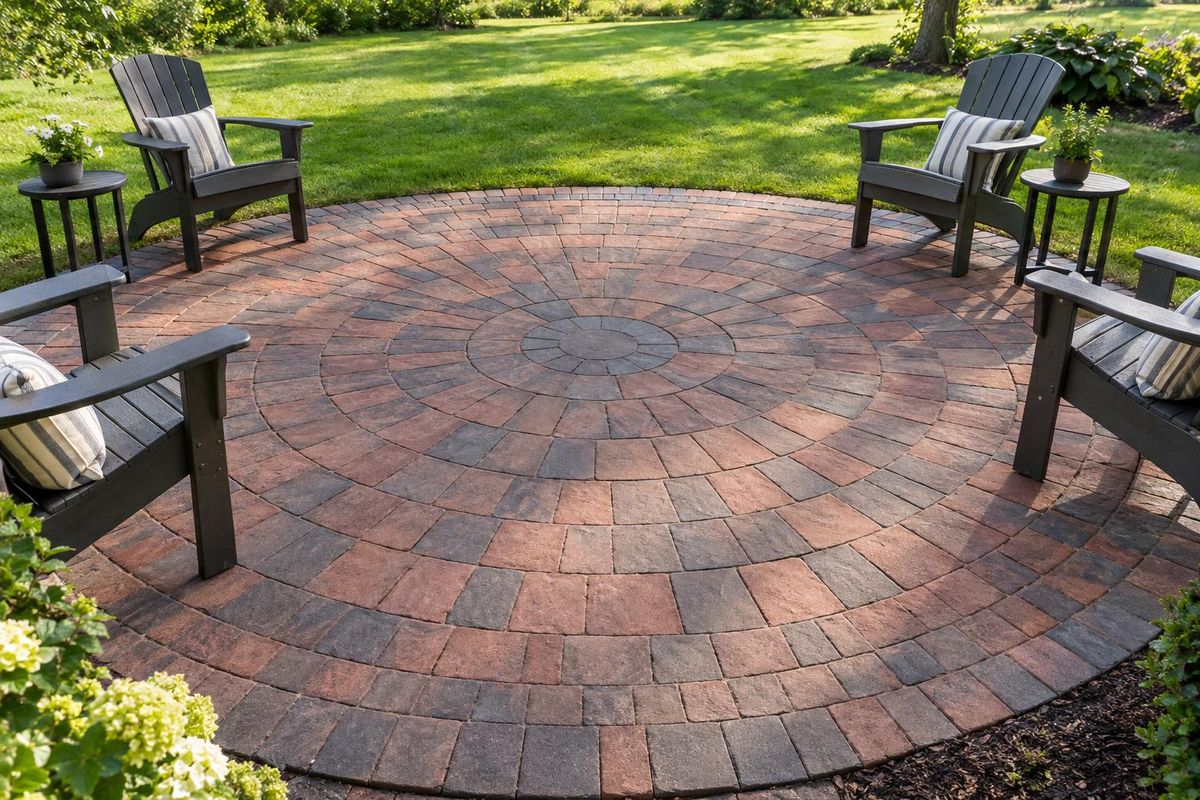
Herringbone is strong and interlocks well. Running bond and basketweave are classic. Borders in a contrasting color frame the patio.
Plan fire pits, seat walls and lighting before laying so they are built in rather than added.
Quick answers
How long does a paver patio take?
Most residential patios take several days to a couple of weeks, depending on size and weather.
Do pavers need sealing?
Sealing is optional. It can enhance color and help resist stains, and it needs re-application over time.